60 mins


 China
China  India
India  Japan
Japan  Philippines
  Singapore
  South Africa
  Sri Lanka
  Thailand
  Colombia
  Ecuador
  Austria
  Denmark
  Finland
  France
  Germany
  Hungary
  Norway
  Poland
  Portugal
  Romania
  Spain
Spain  Sweden
  Switzerland
  United Kingdom
  UAE
UAE  Canada
  Mexico
  United States

.svg)




SAP modernization is now a board-level priority for many enterprises. Mainstream maintenance for SAP Business Suite 7 core applications ends in 2027, with extended maintenance through the end of 2030. Manufacturers still running SAP ECC or heavily customized SAP landscapes have a clear modernization window. But the challenge isn't just moving to S/4HANA. It is modernizing without carrying forward years of process debt.
For manufacturers, this is also a SAP-adjacent workflow orchestration challenge. The real work around SAP often spans plant exceptions, supplier issues, quality deviations, engineering changes, maintenance events, procurement exceptions, approvals, documents, and AI-assisted decisions across SAP, MES, QMS, SCADA, PLM, EAM/CMMS, planning systems, supplier portals, and partner ecosystems.
This is where business orchestration around SAP becomes relevant. It helps manufacturers keep SAP clean while modernizing the complex work around it, from plant exceptions and quality deviations to supplier issues, maintenance events, approvals, and AI-assisted decisions.
In this article, orchestration does not refer to SAP Process Orchestration / SAP PO, the SAP middleware product. We are referring to business and workflow orchestration around SAP, coordinating people, systems, documents, decisions, rules, exceptions, and AI-assisted actions across end-to-end processes.
The core question is no longer only, “How do we migrate SAP?” It is also: What should stay in SAP, what should use SAP-native extension, what should be simplified or retired, and what should be orchestrated around the core?
Many enterprises have built workflows, approvals, ABAP enhancements, spreadsheets, local applications, manual workarounds, and non-SAP integrations around the ERP core. Over time, these increase migration complexity, extend testing effort, slow decision-making, weaken auditability, and make value realization harder. Gartner predicts that by 2027, more than 70% of recently implemented ERP initiatives will fail to fully meet their original business-case goals. That is a strong reminder that ERP modernization alone does not guarantee business outcomes.
"Are we only modernizing ERP, or are we also modernizing the way work actually gets done?"
The hidden challenge: manufacturing work around SAP
SAP should remain the system of record for core transactions and master data. The goal is not to weaken the ERP core. The opportunity is to modernize the work that surrounds it.
In manufacturing, that surrounding work is often complex and highly distributed. Quality deviations, maintenance events, supplier issues, engineering changes, and procurement exceptions frequently cut across SAP, MES, QMS, SCADA, PLM, EAM/CMMS, supplier portals, documents, external partners, and business users who may not need full SAP access but still need to participate in the process.
This is where process orchestration becomes relevant. It creates a governed system of work around SAP by coordinating people, systems, data, rules, decisions, documents, exceptions, AI-assisted actions, audit trails, and KPIs across an end-to-end process. SAP continues to own the authoritative transaction and master data; orchestration manages how work moves and how outcomes are measured.
"Keep SAP clean. Orchestrate the complex work around it."
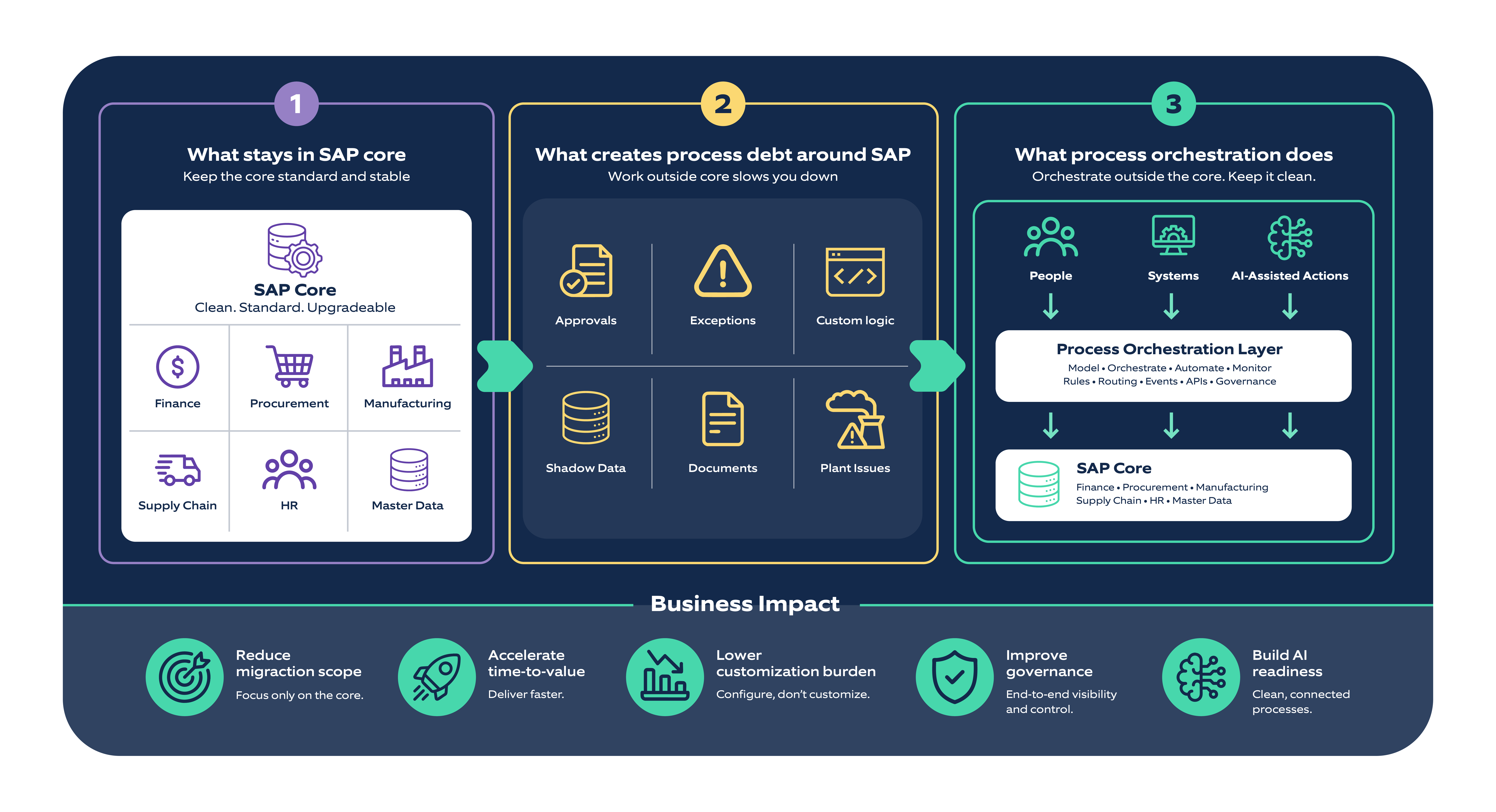
Figure 1: Workflow orchestration fitment in SAP modernization
Why workflow orchestration is different from integration and task automation
Traditional automation solves individual tasks. Integration connects systems. SAP-native extension addresses SAP-centric needs. Process orchestration governs how work moves end to end across systems, people, decisions, documents, rules, exceptions, and outcomes.
That distinction matters in manufacturing, where a single process can span SAP, plant systems, suppliers, business teams, documents, and external stakeholders. Rather than optimizing individual steps in isolation, orchestration coordinates the complete process while maintaining governance, visibility, and accountability.
This allows manufacturers to modernize complex cross-system work without rebuilding that complexity inside the SAP core.
From isolated automation to end-to-end orchestration
Many enterprises have addressed workflow issues through isolated automation tools, scripts, bots, and departmental applications. These efforts may solve point problems, but they often create new silos.
Gartner now groups the broader market under Business Orchestration and Automation Technologies (BOAT): consolidated platforms that enable enterprise process automation through orchestration, connectivity, low-code development, and agentic automation.
For SAP-heavy manufacturers, this is highly relevant because the challenge is rarely one workflow, one bot, one application, or one system. It is the coordination of work across plants, suppliers, business functions, documents, systems, data, rules, decisions, and increasingly, AI-enabled actions.
Where workflow orchestration fits in the SAP journey
Process orchestration adds value across every stage of SAP modernization:
-
Before migration: Identifies process debt and determines what should not be carried forward
-
During planning: Defines clean-core boundaries and establishes the target operating model
-
During execution: Parallelly stabilizes high-friction workflows to reduce disruption
-
For greenfield S/4HANA programs: Avoids recreating legacy complexity in the new environment
-
For brownfield or selective transformation programs: Identifies which processes should be standardized, retired, migrated, or kept outside the ERP core
-
After go-live: Bridges the gap between technical migration and business value realization
For manufacturers, this can mean prioritizing workflows such as supplier onboarding, material master approvals, quality deviations, NCR/CAPA, engineering change, production exceptions, maintenance coordination, invoice exceptions, warranty workflows, or sustainability evidence collection.
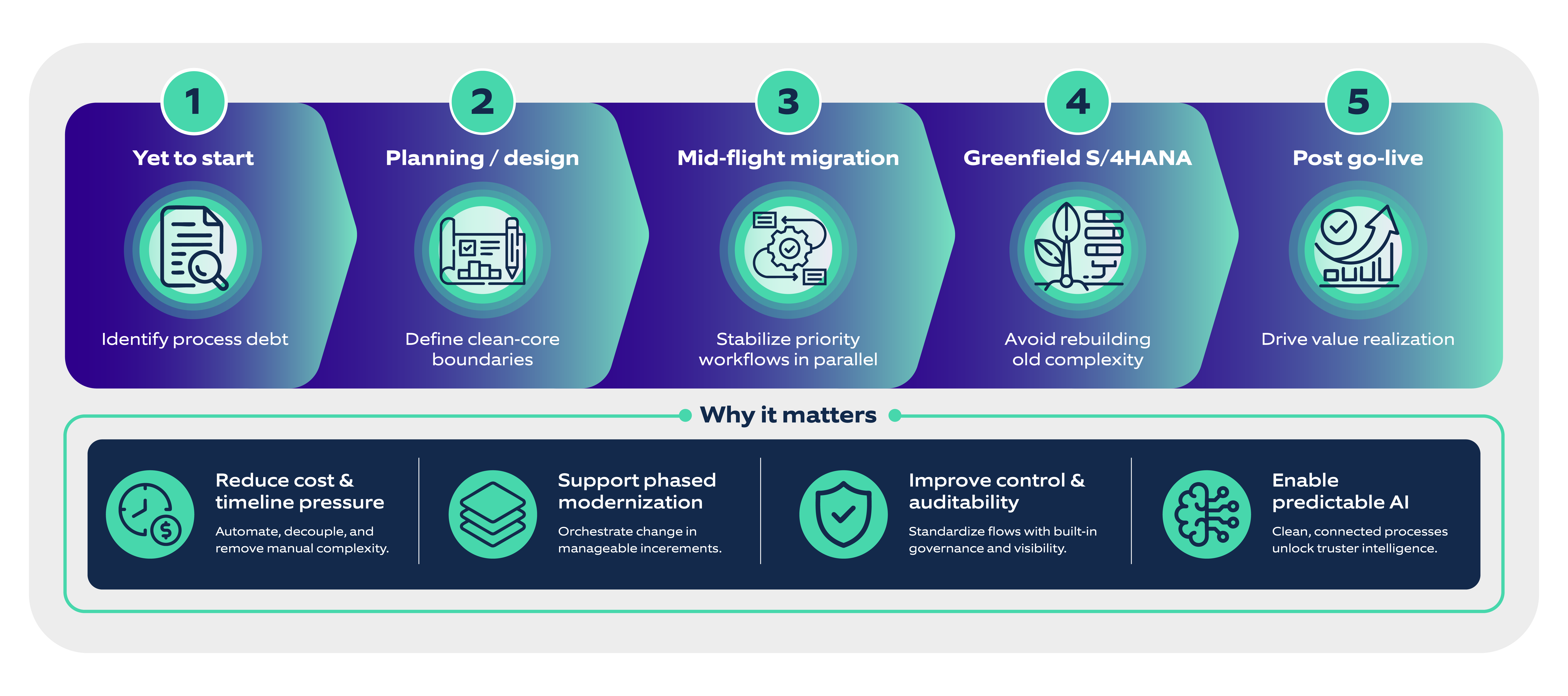 Figure 2: How workflow orchestration helps before, during, and after SAP modernization
What stays in SAP, what extends SAP, and what gets orchestrated?
A strong modernization strategy depends on making deliberate decisions about where work belongs. Then make the distinction extremely scannable. Not every workflow should be externalized, and not every requirement belongs inside SAP.
-
Keep it in SAP: Core records and standardized transactions.
-
Extend SAP: SAP-centric workflows, embedded extensions, integration services, user experiences, and clean-core aligned innovation, including through SAP BTP.
-
Simplify or retire it: Obsolete, duplicate, unnecessarily customized, or inefficient processes.
-
Orchestrate it around SAP: Cross-system, long-running, exception-heavy, approval-heavy, document-heavy, external-stakeholder-driven, or AI-assisted processes.
The value is not in adding another platform layer for its own sake. The value is in making deliberate decisions that reduce unnecessary customization, protect the SAP core, simplify operations, and improve visibility across the flow of work. 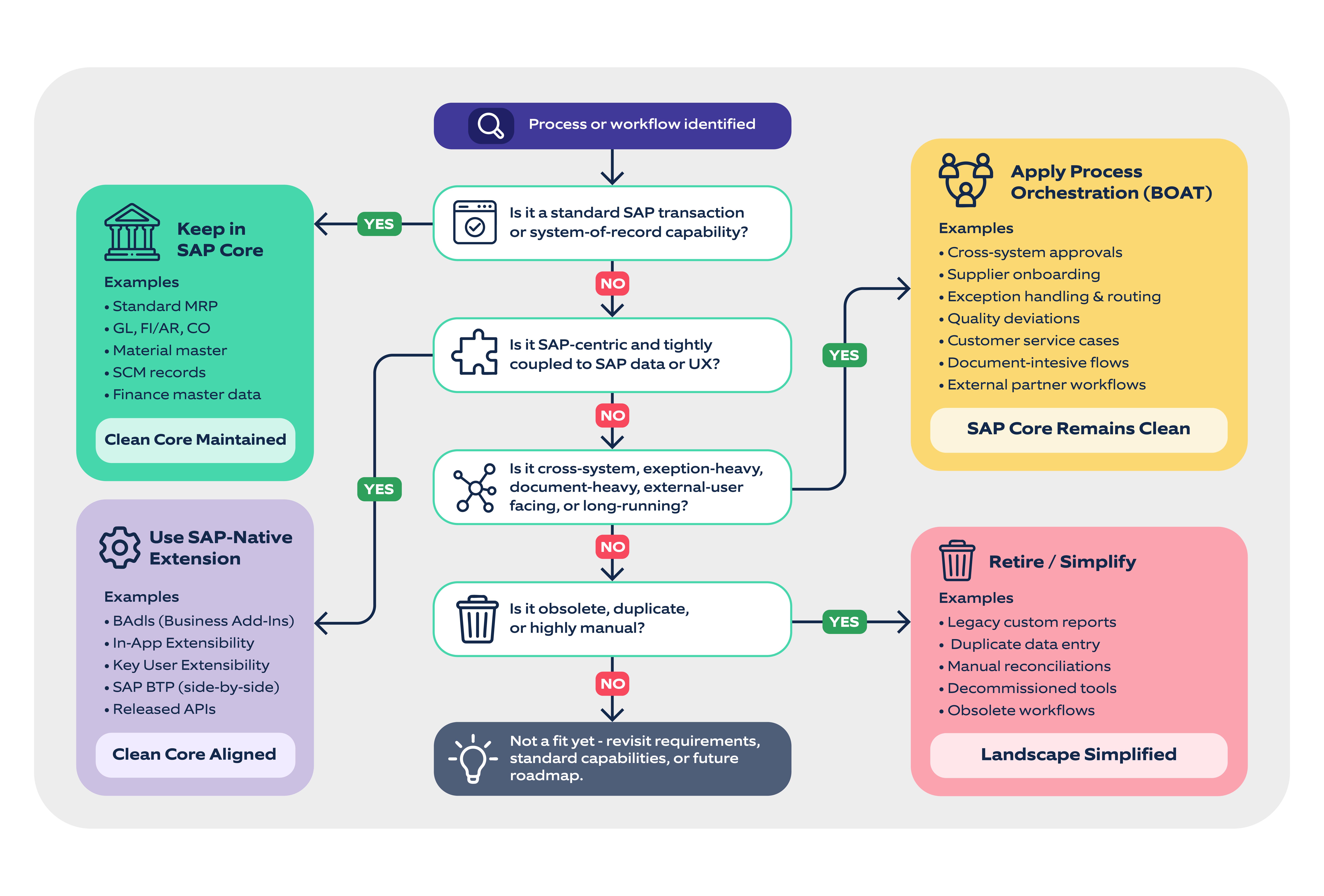
Figure 3: A practical decision flow for keeping the SAP core clean while modernizing the work around it.
Reduce migration complexity, cost, and timeline risk
Large SAP modernization programs can run for years, especially where there are multiple ERP instances, plant-specific variants, custom ABAP, heavy integrations, legacy applications, and complex testing needs. The risk is that business value gets deferred until the end of the program while high-friction processes continue to consume budget, expert capacity, and management attention.
Process orchestration can reduce this pressure in three practical ways:
-
It stabilizes priority workflows before or during migration.
-
It reduces unnecessary migration scope by identifying process debt that should be retired, simplified, standardized, or orchestrated outside the core.
-
It supports phased modernization across ECC, S/4HANA, and non-SAP systems while giving the business better visibility and control.
For manufacturers, this can be especially relevant where plant-level operations cannot wait for a multi-year ERP roadmap to complete before improving exception handling, quality workflows, supplier collaboration, or maintenance coordination.
Give AI a governed path to execution
AI will not create enterprise value by sitting outside the process. Standalone copilots or agents may improve tasks, but not necessarily business outcomes.
For AI to be predictable, it needs process context, governed data access, business rules, human-in-the-loop control, exception handling, audit trails, monitoring, and measurable KPIs. Process orchestration provides that execution foundation.
It defines where AI can recommend, where humans must approve, how rules are enforced, how exceptions are escalated, what evidence is captured, and how outcomes are measured. This is how enterprises move from isolated AI experiments to governed, repeatable, and auditable AI-enabled execution.
For manufacturers, this could mean AI-assisted triage of quality deviations, maintenance prioritization, supplier risk signals, invoice exceptions, document classification, or operational recommendations — but always within governed workflows that preserve accountability.
Putting SAP-adjacent workflow orchestration into practice
Start by discovering where value is leaking, it can be cycle time, exception volume, manual effort, rework, business impact, audit gaps, user pain, cost, or missed SLAs.
-
Classify what belongs where: SAP standard, SAP-native extension, retirement, refactoring, or orchestration.
-
Design the target process with owners, rules, approvals, exception paths, integrations, security, data access, audit needs, and KPIs.
-
Pilot one high-value use case, such as supplier onboarding, invoice exception handling, quality deviation management, maintenance coordination, or document-heavy compliance.
-
Scale using reusable patterns for approvals, case handling, integration, document processing, exception management, audit logging, dashboards, and AI controls.
Guardrails for getting orchestration right
Business workflow orchestration should not become another layer of uncontrolled complexity.
Do not externalize standard SAP transactions unnecessarily. Do not duplicate master data unless justified. Do not rebuild inefficient legacy workflows as-is. Do not bypass SAP governance, security, role-based access, segregation of duties, or enterprise architecture. Do not run AI outside process controls. And do not use orchestration to avoid hard decisions on simplification.
The purpose is to complement SAP modernization: reduce process debt, keep the core clean, improve cross-system execution, and create a foundation for continuous modernization.
How Nagarro helps manufacturers act on this
Nagarro brings a practical, platform-agnostic approach to SAP-adjacent workflow modernization. The focus is not to add another technology layer for its own sake, but to help manufacturers make clear architecture and business decisions: what should stay in SAP, what should use SAP-native extensions, what should be retired, and what should be orchestrated around the core.
Nagarro combines SAP understanding, manufacturing domain context, process modernization capability, integration experience, and AI-enabled transformation expertise to help organizations identify process debt, prioritize high-value workflows, and modernize them in parallel with long-running ERP programs.
A typical starting point is a focused SAP-adjacent workflow modernization assessment. In two to three weeks, Nagarro can help identify high-friction processes, classify them using a clean-core decision lens, select one lighthouse use case, and define a practical roadmap for implementation and scale.
For manufacturers, this could include supplier onboarding, quality deviations, engineering change, maintenance coordination, invoice exceptions, compliance evidence collection, or AI-assisted operational decisioning; all while keeping SAP as the system of record and improving governance, visibility, and business outcomes.
Modernize the business process, not just the ERP
SAP migration may be the trigger, but process modernization is what unlocks business value.
For manufacturers, the opportunity is not only to move to a modern ERP core, but to simplify process debt, improve cross-system execution, and create a governed foundation for AI-ready operations.
"Keep SAP clean. Orchestrate the workflows around it. Scale with control."
To begin, Nagarro recommends a focused SAP-adjacent workflow modernization assessment to identify where process debt is increasing cost, risk, timeline pressure, or value leakage and where one lighthouse workflow can demonstrate measurable impact quickly.