60 mins


 China
China  India
India  Japan
Japan  Philippines
  Singapore
  South Africa
  Sri Lanka
  Thailand
  Colombia
  Ecuador
  Austria
  Denmark
  Finland
  France
  Germany
  Hungary
  Norway
  Poland
  Portugal
  Romania
  Spain
Spain  Sweden
  Switzerland
  United Kingdom
  UAE
UAE  Canada
  Mexico
  United States

.svg)


Article 15 Sep 2026 5 min read
Beyond automation: How Agentic AI in transportation is orchestrating operations
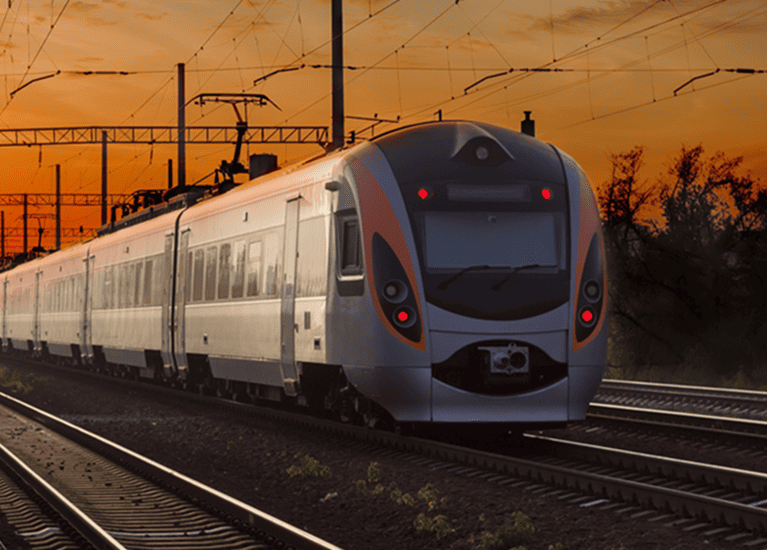


Transportation operators have spent years digitizing their businesses. Trains, buses, rental cars, ride-hailing fleets, shared mobility vehicles, ferries, cruise vessels, depots and infrastructure are increasingly interconnected. Maintenance, planning, workforce, passenger, and finance systems—each manage a part of the operation.
But connectivity alone does not guarantee coordination. The transportation enterprise still needs a way to turn fragmented information into coordinated decisions and action.
The challenges in transportation operations
Transportation operators face a set of persistent challenges:
-
Unpredictable task durations: The time required to complete maintenance and operational tasks can be difficult to estimate accurately.
-
Fragmented information: Data is spread across multiple systems, making it difficult to build a complete operational picture.
-
Lack of real-time visibility: Teams may lack a current, integrated view of asset availability, workforce constraints, parts, facilities, and passenger impact.
-
Difficulty coordinating across organizational boundaries: Different teams may have separate priorities, processes and decision rights, making it difficult to turn shared information into a coordinated response. Depots and other facilities are frequently operating under significant capacity pressure.
-
Concentrated expertise: Critical operational knowledge may reside with only a small number of experienced experts.
As a result, decisions often rely on manual coordination, incomplete information and assumptions that are difficult to verify, increasing operational risks and, ultimately, costs.
The gap between information and action
Transportation operators have extensive data, but it is often fragmented across systems and teams. When assets fail or conditions change, they must quickly coordinate decisions involving safety, availability, maintenance, workforce, facilities, passengers and cost.
Limited capacity, uncertain task durations, and siloed expertise make this difficult. The core challenge is not data availability, but turning incomplete information into coordinated, timely decisions across organizational boundaries.
Each system and team answers part of the question. Few evaluate the decision as a whole.
From connected systems to coordinated intelligence
Agentic AI in transportation can connect intelligence across existing systems to help transportation teams make better informed decisions faster. Specialized agents can assess assets, fleets, workforce, parts, schedules, passengers and risks, while an orchestration layer combines these perspectives into a recommended response.
The approach reduces manual coordination by gathering context, identifying constraints, comparing options, and explaining trade-offs. It also makes specialist expertise more accessible across the operation while preserving human oversight for safety-critical, regulatory and judgment-based decisions.
Digitization makes information accessible.
AI makes processes smarter.
Agentic AI intelligently coordinates operations.
Agentic AI in transportation: Intelligence at the right level
Transportation AI should not centralize every sensor reading and operational event. A more effective model is:
Intelligence at the edge. Expertise in the domain. Orchestration across the enterprise.
With edge agents, filtering and contextualizing signals near the asset, and escalating only meaningful events becomes more convenient. As AI models become smaller and more capable, and device chips and available computing power continue to improve, these agents can become tinier, faster and more performant while operating closer to the source of the data. Domain agents then assess their implications across maintenance, fleet, workforce, facilities, parts, passengers, and operations.
When decisions cross these areas, orchestration connects the perspectives, exposes dependencies and conflicts, clarifies ownership, and presents options based on the full operational picture.
Local systems identify what is happening. Domain agents determine what it means. Enterprise-level AI orchestration helps people decide what happens next.
Higher-level agents can then focus on the more important question:
What should we do about it?
They can evaluate inspection timing, whether an asset should remain in service, replacement assets, staff, facilities, schedule recovery, passenger impact, cost, compliance, and operational risk. The orchestration layer brings these perspectives together into a coordinated recommendation, makes the reasoning visible, and routes the decision to the appropriate person or system for approval and execution.
One principle, many modes of transportation
The same decision pattern applies across ground & water transportation.
-
For rail and bus operators, it may involve vehicles, routes, depots, signaling, or drivers.
-
For rental and ride-hailing businesses, it may involve vehicle availability, maintenance, demand, and repositioning.
-
For micromobility providers, it may involve charging, maintenance, and fleet rebalancing.
-
For ferry and cruise operators, it may involve vessels, crews, ports, maintenance, and passenger services.
Across these modes, four core areas stand out.
1. Fleet and infrastructure maintenance
Predicting a fault is only the beginning. Operators must also decide when and where to perform maintenance, whether parts and qualified staff are available, and how removing an asset will affect service.
Agentic AI can bring in the opportunity to connect the assets’ condition, maintenance demand, people, parts, facilities and operational availability into one continuously optimized workflow.
2. Fleet operations and resource optimization
Transportation is fundamentally an asset-and-resource allocation business.
Agentic AI can continuously evaluate changing demand, disruption, asset condition, staffing, and network conditions. Simulation can help agents compare possible operating scenarios before action is taken, while targeted nudges can prompt planners, controllers, or maintenance teams when human intervention is needed. Agents can also recommend maintenance windows based on mileage, condition, and upcoming service requirements. Instead of optimizing one variable, they can balance service reliability, passenger demand, utilization, cost, maintenance, and workforce constraints.
3. Passenger experience
Passenger communication is often treated as a final step after an operational change.
Agentic operations can bring passengers into the decision earlier by identifying who is affected, which connections are at risk, what alternatives have capacity, and which recovery actions are possible.
The experience can shift from “Your service is delayed” to “Your service is delayed. Here is the best alternative for your journey based on current network conditions.”
4. Enterprise operations
Operational decisions often have financial, commercial, and workforce consequences.
A maintenance decision may affect procurement. A fleet decision may generate overtime. A disruption may create compensation exposure. A resource shortage may require external suppliers.
Agentic AI can connect operational decisions with enterprise context without requiring users to move manually between systems.
Disruption highlights the coordination problem
Imagine a signaling failure delays a train needed for a later service. The controller must weigh passenger impact, crew and fleet constraints, recovery options, risk, and cost.
Multi-agent AI can analyze these factors in parallel and provide one explainable recommendation. The same approach applies across bus, fleet, shared mobility, rental, and water transport operations.
Keeping humans in the control loop
Transportation decisions remain subject to safety, regulatory, labor, and operational constraints. AI should recommend and explain, while people retain accountability.
Organizations can begin with observation and recommendations, then automate low-risk actions within defined guardrails. Critical decisions should continue to require human approval.
The goal is not maximum autonomy, but the right level of autonomy for each decision.
Connecting existing systems with Agentic AI
Operators can build on top of their existing fleet, maintenance, planning, crew, passenger, and ERP systems. Agentic AI can connect these systems, coordinate information and actions, and improve one bounded operational problem at a time.
The real transformation lies in redesigning how decisions move through the enterprise.
From connected to coordinated transportation operations
Transportation has digitized assets and optimized individual systems. Agentic AI can connect the decisions between them.
Edge intelligence in transportation operations can contextualize events near the asset, while domain agents assess implications for maintenance, fleet, passengers, workforce, and cost. An orchestration layer brings these perspectives together, with people retaining accountability for important decisions.
The result is a more coordinated operation that responds faster to disruption, uses resources more effectively, anticipates maintenance needs and improves passenger outcomes.
The transportation companies that benefit most from Agentic AI may not be those that automate the most decisions.
They will be those that orchestrate the best decisions—across assets, systems, people and passengers.
For transportation leaders, the question is no longer simply:
Where can we apply AI?
The more valuable question is:
Which decisions are still being made in the gaps between systems, and what would happen if intelligence could finally connect them?
Want to understand how the Agentic AI approach translates for your business? Or, do you have a challenge we can explore together? Just message me directly on LinkedIn and we'll talk.