60 mins


 China
China  India
India  Japan
Japan  Philippines
  Singapore
  South Africa
  Sri Lanka
  Thailand
  Colombia
  Ecuador
  Austria
  Denmark
  Finland
  France
  Germany
  Hungary
  Norway
  Poland
  Portugal
  Romania
  Spain
Spain  Sweden
  Switzerland
  United Kingdom
  UAE
UAE  Canada
  Mexico
  United States

.svg)




Every marketing leader wants faster, more personalized campaigns. Few realize that the real bottleneck is not creativity – it’s campaign operations.
From brief interpretation and creative production to approvals, compliance reviews, localization, and asset finalization, every campaign relies on a complex network of workflows. Operational inefficiencies and delayed campaign execution silently drain marketing budgets, with industry studies estimating that nearly 37% of marketing spend is lost due to workflow inefficiencies, rework, and coordination delays. (Source: Ryze)
Somewhere in the middle of all this, deadlines tighten and files multiply.
These are campaign operations, with creative ops acting as one of its most critical moving parts within the advertising lifecycle.
AI adoption in marketing is accelerating rapidly, with 75% of marketers already using AI for content creation and 86% of advertisers using or planning to use generative AI for campaign execution. Yet creative operations remain heavily fragmented across teams, tools, approvals, and platforms. As campaign volumes, personalization demands, and localization requirements continue to grow, operational complexity is becoming one of the biggest bottlenecks in modern AdTech. (Source: HubSpot marketing statistics)
The goal is not to replace creative teams, but to augment them with specialized AI agents that eliminate operational friction. This simply means turning vague briefs into structured requirements, producing compliant creative variants at scale, routing approvals more intelligently, and learning from the outcomes of previous work. Humans would remain in control at the right points. The system carries more of the operational load while keeping Humans-In-The Loop (HILT).
The campaign ops mess
Campaign operations often break down due to poor synchronization between the chain of small tasks spanning across teams, tools, and timelines.
A brief which starts as, “Make this premium, urgent, and suitable for multiple audiences”, sounds simple until it is translated into actual deliverables involving managing multiple channels, formats, audience segments, regional adaptations, platform restrictions, legal disclaimers, and brand guidelines. What began as a campaign idea quickly turns into a coordination headache.
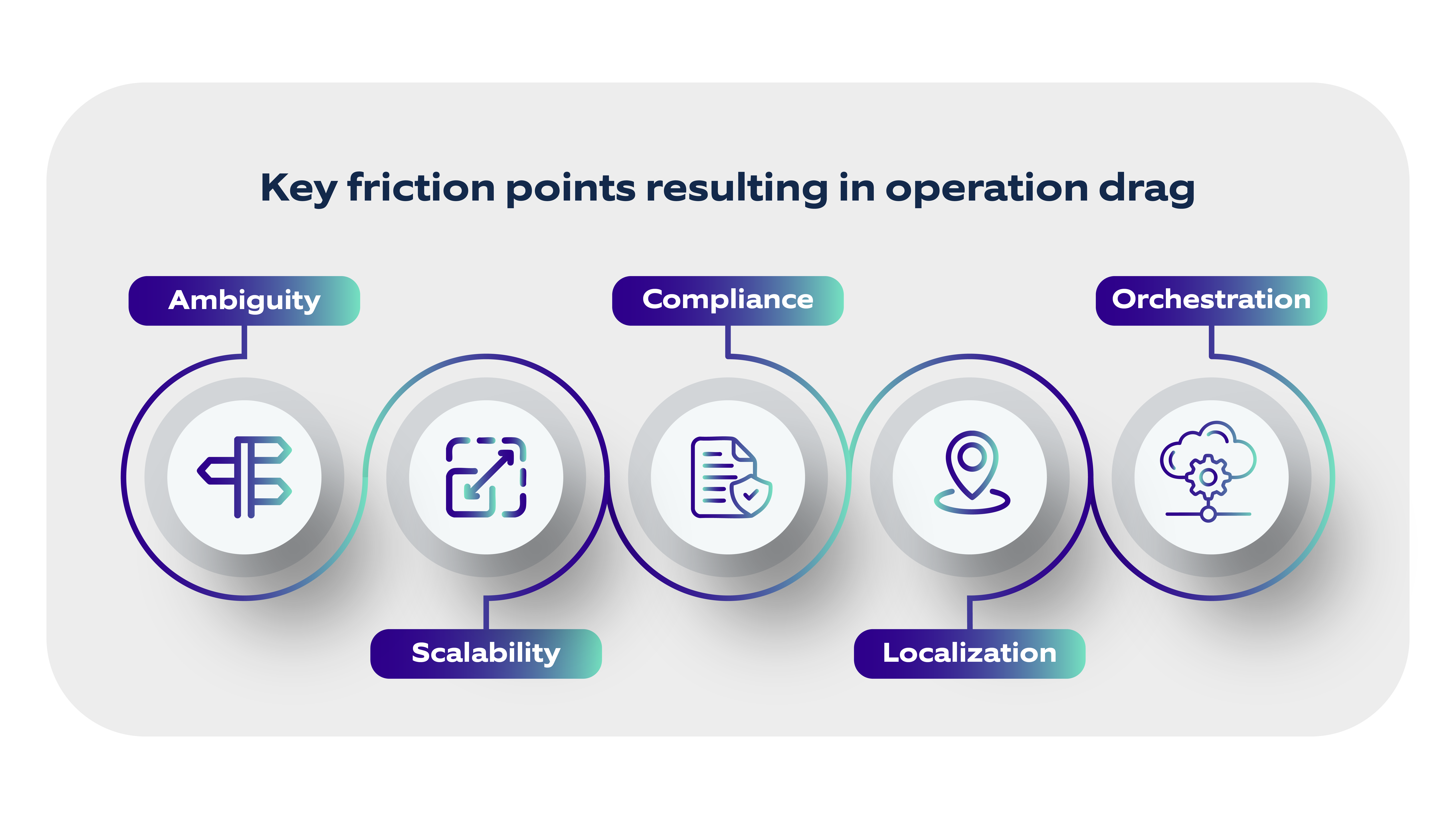
Figure 1: The frictions that result in slow operations
Key friction points resulting in operation drag:
Ambiguity
Campaign briefs are often strategic rather than executable. Terms such as “premium,” “bold,” or “performance-driven” leave room for interpretation across creative, media, and operations teams, resulting in inconsistent execution and repeated revisions.
Scalability
A single campaign can rapidly expand into dozens of variants across channels, placements, audience segments, and markets. As personalization and regional targeting increase, managing creative consistency and operational efficiency becomes significantly harder.
Compliance
Creative assets must satisfy legal requirements, platform policies, and brand safety standards. Even minor issues such as missing disclaimers or risky phrasing can delay launches and trigger repeated review cycles.
Localization
Translation alone is not enough for global campaigns. Messaging must align with local culture, tone, legal expectations, and consumer context, making large-scale localization both operationally intensive and error prone.
Orchestration
Creative workflows are often spread across emails, chats, spreadsheets, ticketing systems, and disconnected tools. Feedback becomes fragmented; approvals slow down, and valuable campaign learnings rarely translate into a structured, reusable workflow.
What Agentic AI means in AdTech terms
Agentic AI is often misunderstood. In practice, it refers to as a coordinated system of AI agents, each with a defined role, some memory of context, and the ability to act within guardrails.
In campaign operations, specialized agents can structure briefs, fetch assets, generate channel-specific creatives, check compliance risks, and localize content, and coordinate downstream execution workflows through a centralized orchestration layer.
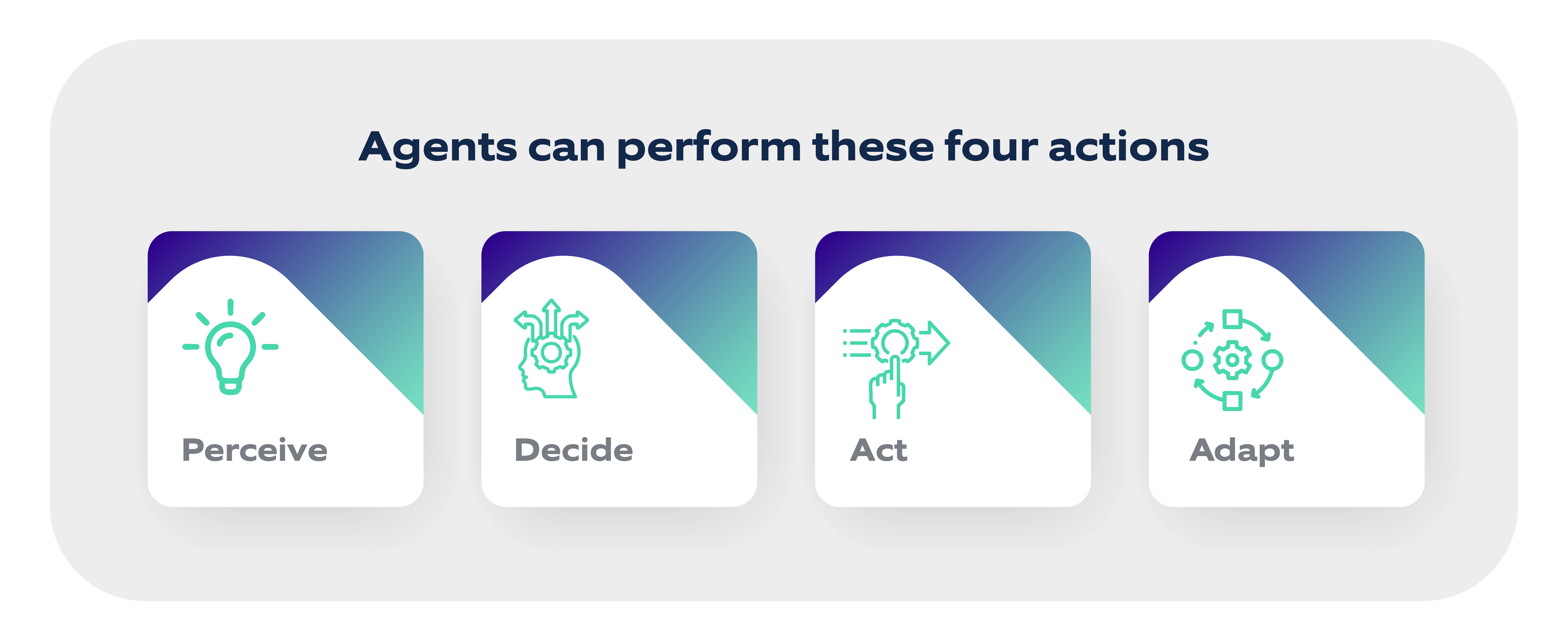
Figure 2. The capabilities of an agent
A useful way to think about these agents is through the following basic capabilities:
-
They perceive by reading briefs, asset metadata, performance signals, brand guidelines, and policy documents.
-
They decide the next step by determining which variants should be created, which items are risky, and which tasks need escalation.
-
They act by pulling assets, creating drafts, running checks, packaging outputs, and moving work through the process.
-
They adapt by learning from approvals, rejections, performance outcomes, and recurring review comments.
This is what makes the approach practical. The system participates in the workflow rather than just producing the content.
.png?width=41087&height=8684&name=AI%20in%20Creative%20Ops%20Blog%20Illustration-03%20(1).png) Figure 3. Why campaign ops slows down: The bottleneck is not one task
Figure 3. Why campaign ops slows down: The bottleneck is not one task
A better model for campaign orchestration
A stronger model treats campaign orchestration as a connected system rather than a series of disconnected tasks.
The first step is to make the brief usable. A brief interpreter agent can convert campaign intent into structured requirements such as target audience, channel mix, tone, offer, mandatory language, and known constraints. Once that is available, an asset curator can find brand-approved visuals, templates, and reference creatives from internal libraries. Throughout the process, a shared workflow state keeps track of the status of approvals, rejections, and the reasons for these decisions. Human reviewers remain involved where creativity, context, and judgment are essential, but with richer insights and significantly less repetitive manual effort.
 Figure 4. A shared orchestration layer coordinates specialized agents, enterprise inputs, and final campaign outputs.
Hidden bottlenecks caused by late-stage thinking
There are mainly two areas where campaign operations repeatedly get stuck: compliance and localization.
Even though the industry often treats compliance as a late-stage filter, it needs to be built into the workflow from the beginning. Claims, disclaimers, category restrictions, and platform-specific policies all affect the creative direction itself. If these are checked too late, teams end up doing rework.
Localization has a similar issue. It is often treated as a copy adaptation exercise, when it's really a contextual decision-making exercise. A localized version must preserve brand meaning while also respecting local language, culture, and regulation. That is why this work benefits AI assistance but still requires careful guardrails and selective human review.
An agentic system simply embeds them both into the process instead of treating them as last-minute obstacles.
AI Ad Campaign Orchestrator: A multi-agent accelerator for creative operations
One practical extension of this model is an AI Ad Campaign Orchestrator an accelerator that unifies campaign planning, creative production, execution, and optimization into a single intelligent workflow.
Here’s how we use an agentic workflow to transform the outdated operating model of a campaign lifecycle.
The process begins with a campaign orchestration layer that converts a high-level business brief or marketing objective into structured campaign logic. Instead of treating campaign planning, creative generation, and execution as disconnected activities, the workflow aligns objectives, KPIs, audience segments, budget allocation logic, targeting rules, and channel mix from the very beginning.
Specialized AI agents handle different operational responsibilities in parallel. Some focus on audience segmentation and personalization logic, while others determine placement strategy, inventory selection, bid logic, and budget distribution across channels. Execution-oriented agents prepare campaign hierarchies, ad groups, tracking pixels, naming conventions, metadata standards, and export-ready deployment structures required for launch.
The orchestration workflow integrates directly with downstream advertising ecosystems through exportable XML or JSON configurations, supporting platforms such as Google Campaign Manager 360, FreeWheel, Meta platforms, DOOH platforms like Broadsign, Salesforce Marketing Cloud, and print-oriented production flows using Adobe Illustrator and PDF pipelines.
Once campaigns go live, the optimization layer continuously monitors live performance signals such as CPM, CPC, CTR, conversion trends, pacing, and placement-level engagement. Rather than waiting for post-campaign analysis, predictive models and reasoning-driven optimization agents evaluate campaign trajectory in near real time and identify risks before budgets are exhausted.
For example, in a ten-day campaign, the system identifies within the first two days the underperforming channels, placements, or audience segments. Based on these insights, optimization agents recommend budget reallocation, creative refreshes, placement adjustments, or audience refinements to maximize performance and reduce wasted spend.
This shifts campaign optimization from reactive reporting to active intervention during the campaign lifecycle itself resulting in more adaptive and operationally efficient workflow. Campaigns move from business objective to execution with greater consistency, traceability, and control, while keeping strategic approvals and governance firmly in human hands.
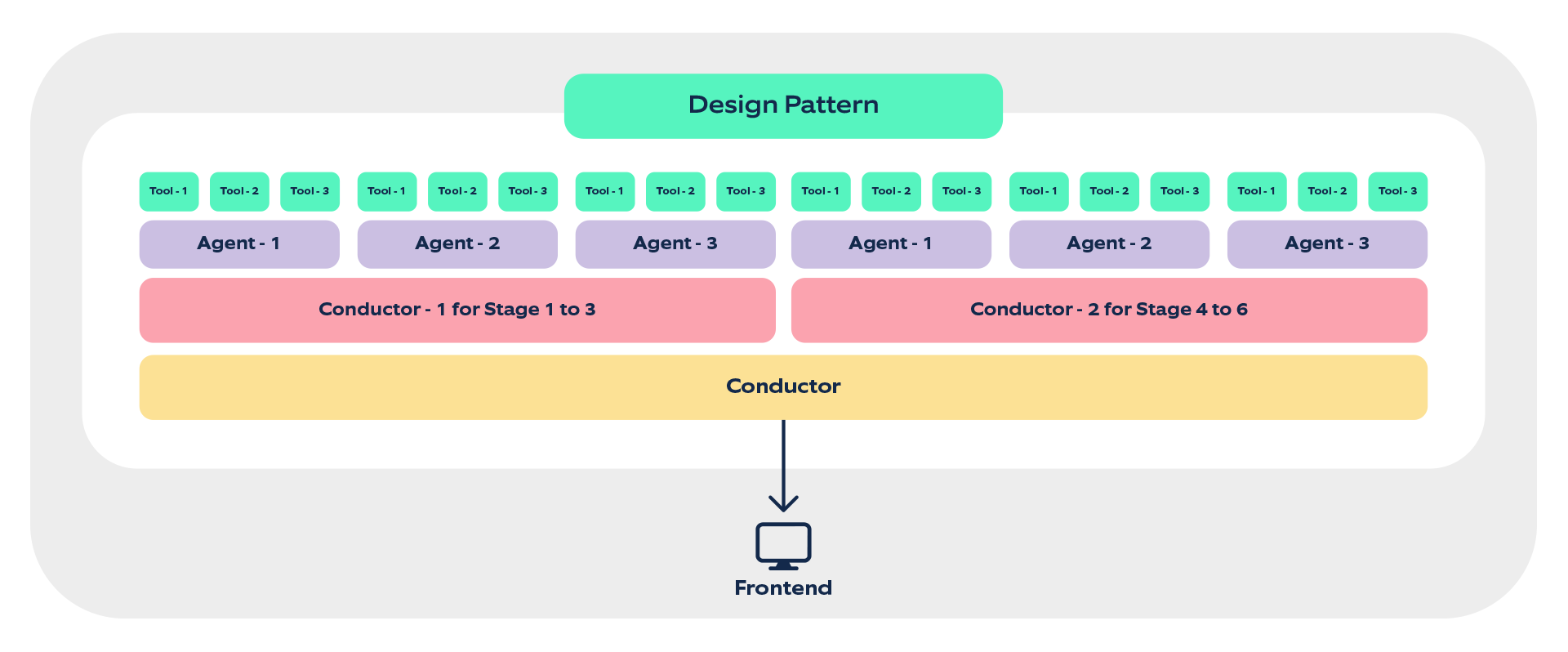 Figure 5. Centralized hierarchical multi-agent design pattern
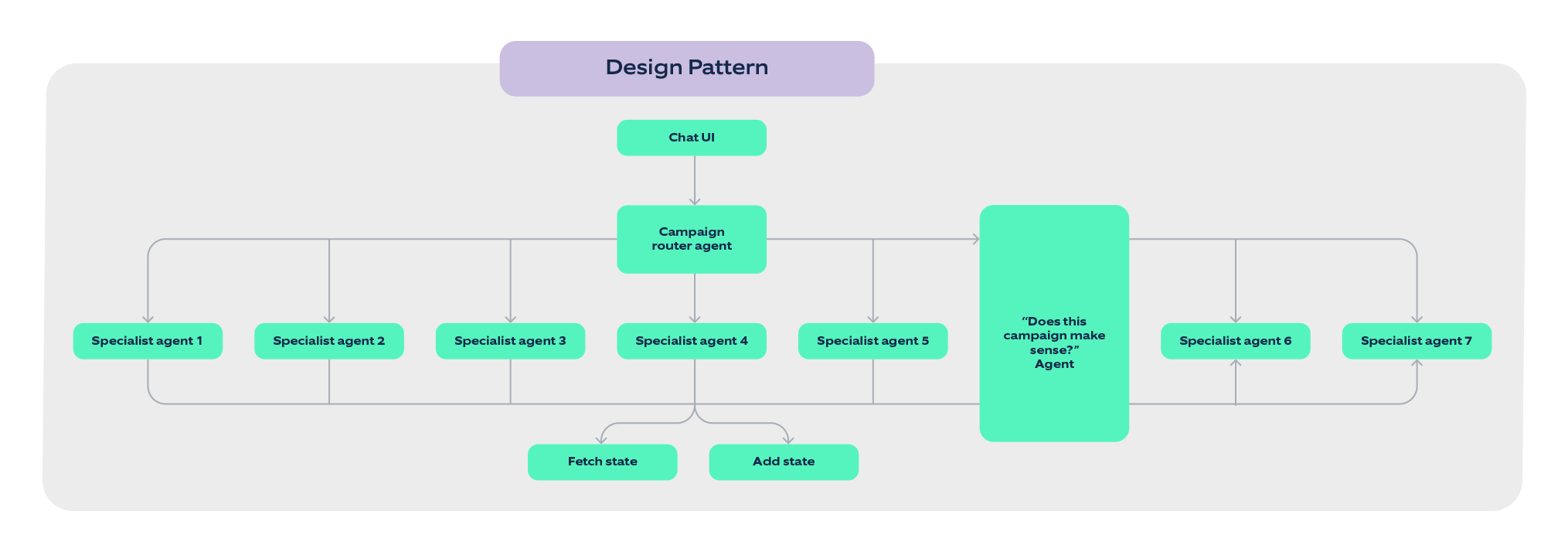 Figure 6. Decentralized non-hierarchical multi-agent design pattern
Conclusion
Campaign operations are not broken because teams are incapable. They are broken because the systems around them have become fragmented, context-poor, and heavily dependent on manual coordination. Agentic AI offers a practical way forward. It transforms campaign operations from a sequence of disconnected tasks into a connected workflow that can interpret context, coordinate execution, support compliance, enable localization, and continuously optimize live campaigns while keeping human accountability where it belongs. What changes is not just speed, but the overall intelligence and adaptability of the process.
For AdTech organizations, this shift is becoming increasingly important. As channels multiply, creative volumes rise, and campaign cycles shorten; campaign operations can no longer remain in an invisible bottleneck. It must evolve into a strategic capability that enables faster decision-making, scalable personalization, and more efficient execution.
At Nagarro, we see Agentic AI not as a standalone feature, but as an operational model for the next generation of Advertising ecosystem. By combining AI orchestration, creative intelligence, data-driven optimization, and enterprise integration capabilities, we enable organizations to move from fragmented campaign execution toward more adaptive, scalable, and insight-driven campaign orchestration.