The health episode has three owners
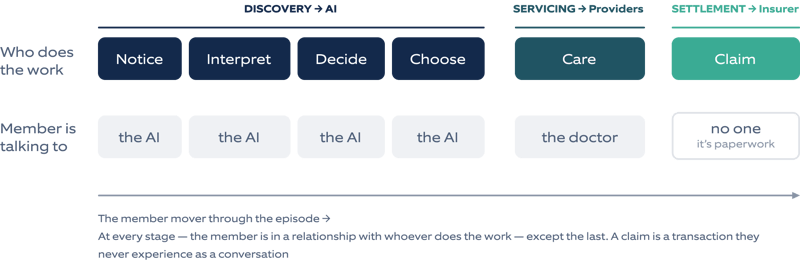
The insurer holds only the final slice, the one stage the member never experiences as a relationship.
Figure 1: Who the member is talking to, at each stage of a health episode.
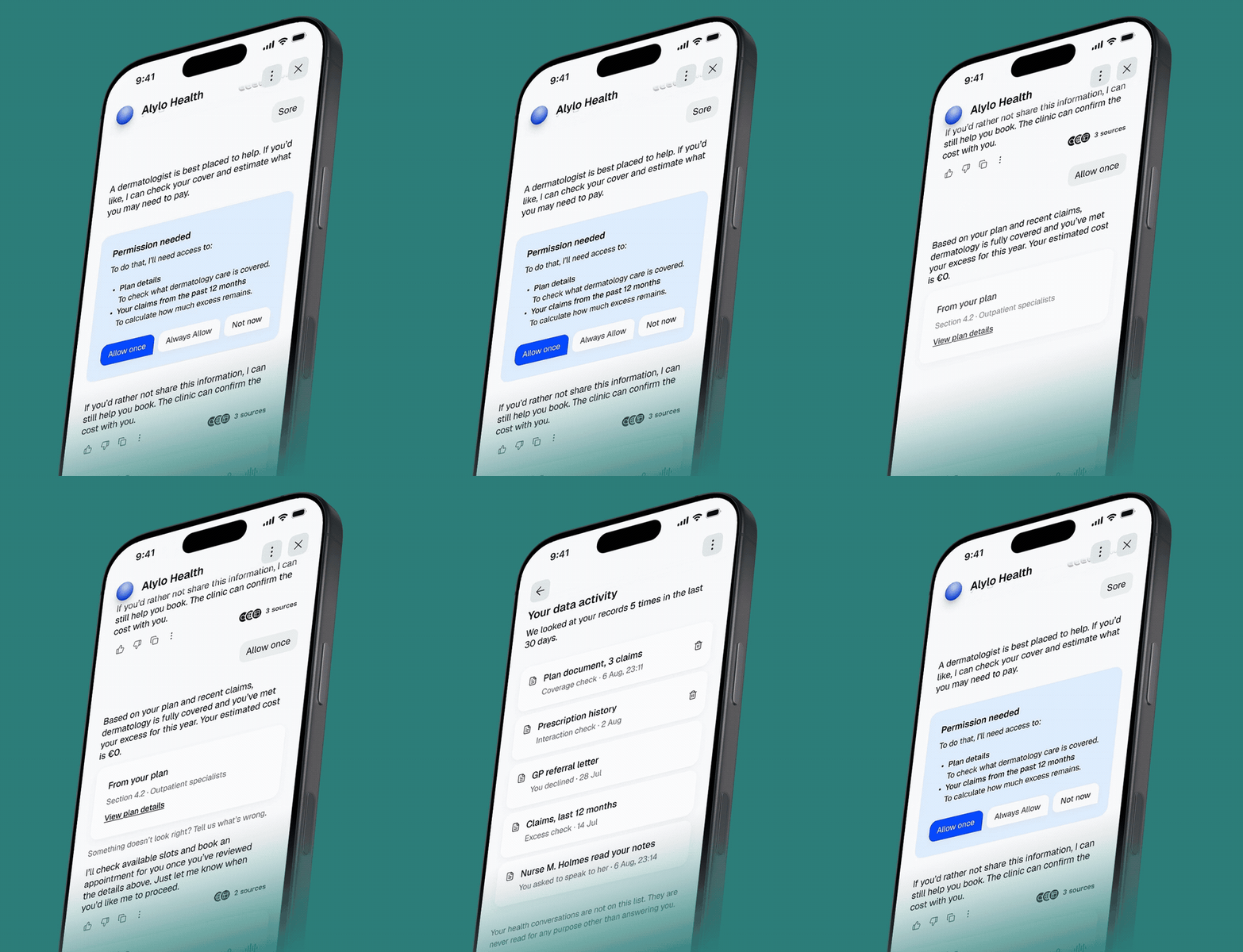
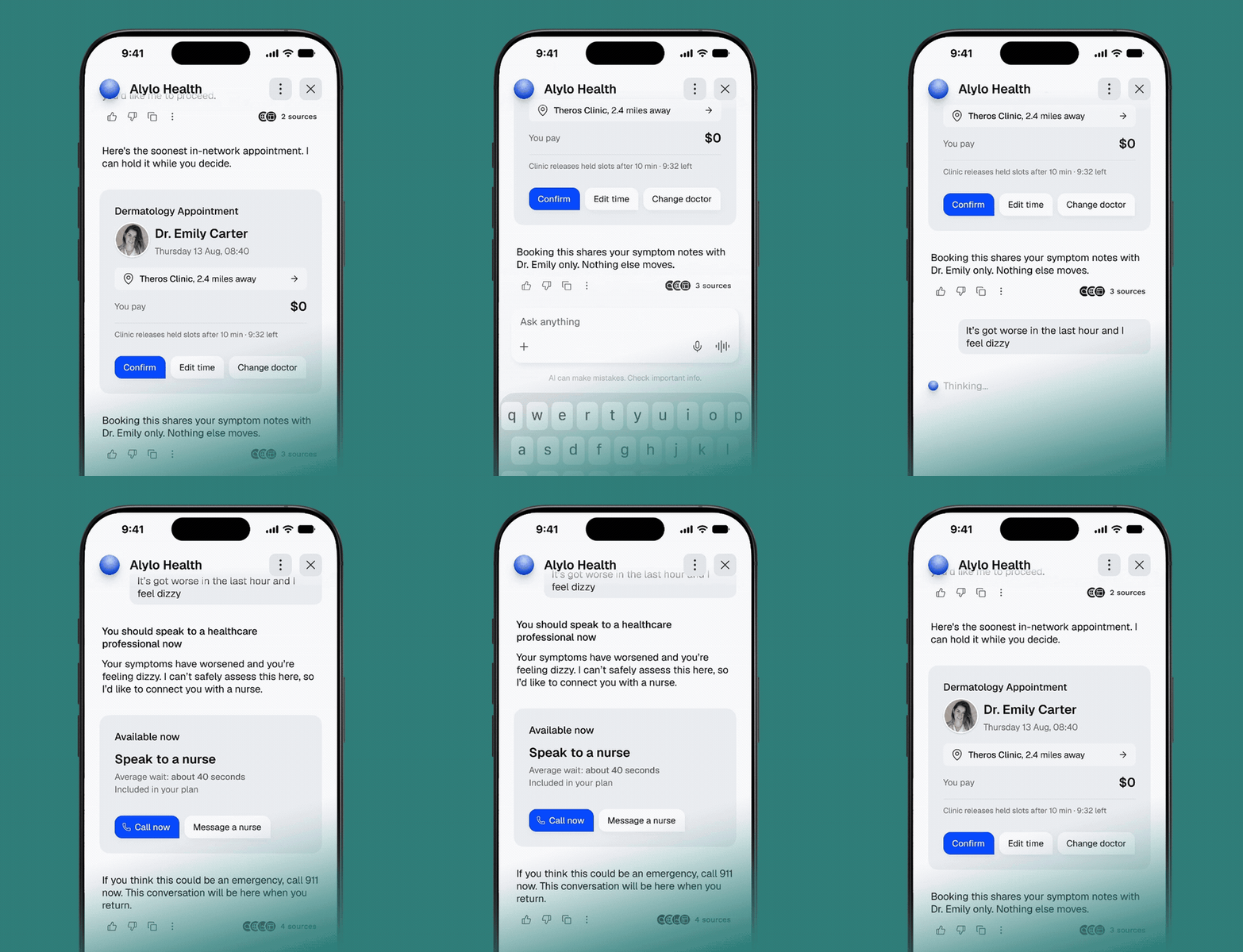
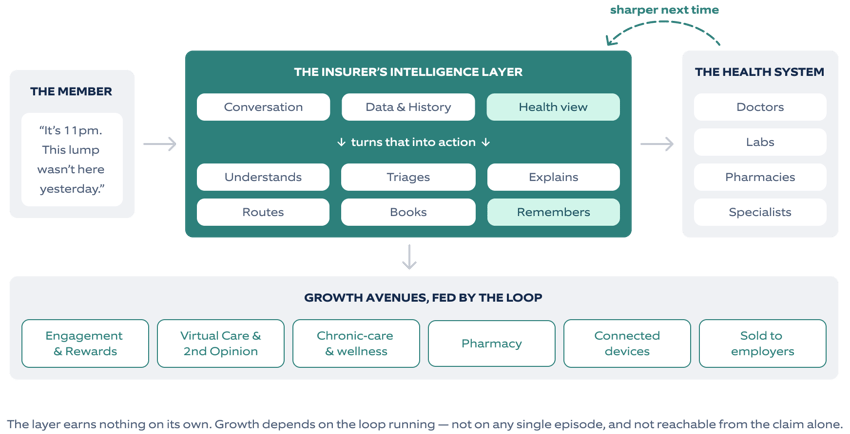
The diagram shows the whole episode and a gap running through it. Nothing holds the conversation at the front, carries what the plan covers into the middle, and routes into the care that follows. That joining role is the orchestration layer, and no incumbent owns it at scale.
That isn't an oversight; it's a trust problem. Why would a member describe a symptom to the company that prices their risk? No insurer has answered that convincingly, so none of them have built it, and everyone has walked away from the conversation instead.
2. Insurers can't grow inside the premium. The way out is a conversation they're not having.
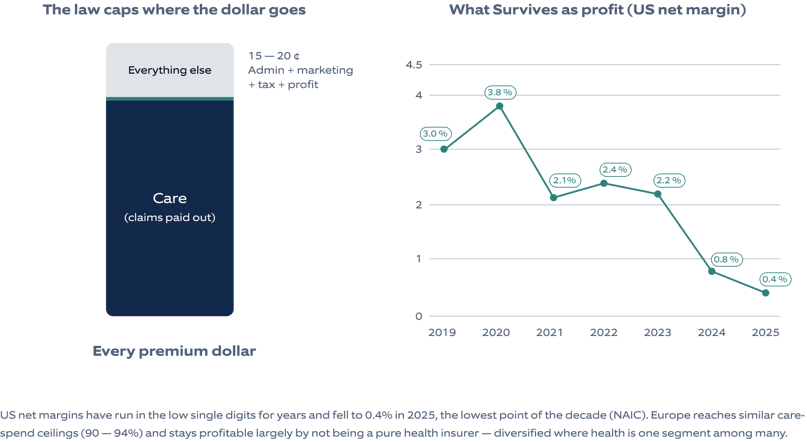
Regulators have already decided how much of a premium an insurer keeps. In the US, the Affordable Care Act is explicit: at least 80% must go to care, 85% in large-group and Medicare Advantage, leaving 15 to 20 cents to cover staff, technology, marketing, and profit. What survives as profit is a single-digit net margin of a nickel for years, falling to just 0.4% in 2025, the industry's lowest point of the decade (NAIC).
Europe reaches the same ceiling through regulated competition rather than a mandate, with 90% to 94% of premium going on care. In the Gulf, the cap is the product itself: cover is compulsory, and the regulator writes the benefits, with Saudi Arabia binding every licensed insurer to a single policy, so what one insurer sells is close to indistinguishable from the next. 3 rulebooks, one outcome - no room to grow inside the premium.
You cannot grow inside the premium
The law caps where the dollar goes; what’s left as profit is a nickel that some years turns negative.
Figure 2: How much of every premium dollar the law allows an insurer to keep.
Which leaves one direction, and it sits outside the premium: care delivery, virtual visits, chronic-disease management, pharmacy, wellness. These are the services around the insurance rather than the insurance itself, and none of them count against the medical-spend cap because none of them are the insurance product. This is why becoming a health company stopped being a slogan and turned into a necessity. But nobody enrols in a diabetes programme because it exists; they enroll because someone put it in front of them at the moment it mattered.
Take the relationship away and ask what separates one insurer from another. Price and network, both of which a competitor can match, and even the old data advantage is going now that a member can hand their entire medical history to ChatGPT in a few taps. The relationship is the only asset left that cannot be copied or undercut. It is also the one thing almost none of the current AI spending is pointed at.
3. Where the spending goes & where it doesn’t
Insurers have already built the assistant. UnitedHealth had guided to $1.5 billion for 2026; by mid-2026 that had doubled to a $3 billion, two-year commitment; Elevance, formerly Anthem, has one reaching 22 million members; Humana runs a Gemini-built assistant behind more than 20,000 care advocates. Ask what any of them do and the answer is the same: explain what's covered, find someone on network, chase a claim. Good tools for the conversation insurers were already having. Only Oscar has pointed one at symptoms instead of coverage, and it now handles 86% of member questions (Becker's, 2026).
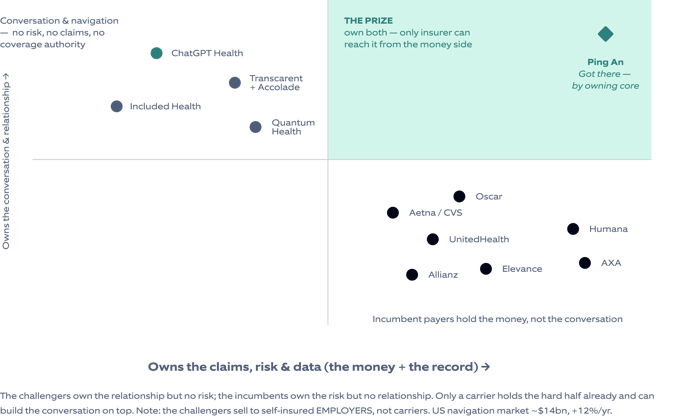
Only one player can own both sides
Everyone else holds half. The winnable corner is reachable from exactly one direction.
Figure 3: Who owns the conversation, who owns the risk, and who owns both.
The reason the rest haven't is visible in how the spending gets justified. UnitedHealth reports its AI returns entirely as savings - about a billion dollars of the cost taken out, with most projects paying back within a year or two (STAT, 2026). Money not spent, never money newly earned. "Cut contact-center cost 20% by Q3" fits in a board deck; "be there when a member first wonders if something is wrong" does not. And while insurers optimized the paperwork, a $14 billion global care-navigation market grew up around them - a meaningful share of it already selling guidance straight to the employers who buy US insurance (The Business Research Company, 2026).
Ping An didn't just build the assistant; trust was already there, and it's why members bought more from the company beyond the core policy - the same growth that only exists outside the premium (Ping An, 1H 2026). Treat it as directional, since the market and the moment differ, but it's the clearest proof anyone has that the join works, which is what the rest of this piece is about to define.
4. The conversation worth building for
So, what does owning it look like, and how does a conversation turn into growth?
Let's start with what it isn't. It isn't a slicker chatbot that's competing on the one thing that's becoming free. And it isn't buying hospitals the way Ping An had to; Ping An is the proof, not the template. Until now, being there when a health episode began meant owning the care that followed, because owning the care was the only way to have the relationship at all. That's the part AI removes: an insurer can orchestrate the care rather than own it, sitting between the member and a health system it partners with.