DTECH 2026: A debrief

insight
Feburary 24, 2026
9 min read

A brief overview of the priorities shaping the power sector: investment imperatives, technology adoption, and the future direction of utilities in North America and beyond.

DISTRIBUTECH (DTECH) 2026 in San Diego marked a decisive shift in the energy and utilities narrative. After nearly two decades of modest load growth, the industry now faces structural acceleration. NERC projects peak demand in North America could expand by roughly 25% over the next decade, driven by AI-enabled data centers, electrification of transport and heating, and industrial reshoring.

The central tension voiced across executive panels was clear: How do utilities execute at speed without breaking reliability, affordability, or trust?

This year’s conversations moved beyond digital experimentation. Leaders are no longer asking whether to modernize, but how to scale capacity, resilience, and execution discipline fast enough to match a system operating at the intersection of two accelerating curves:

  • Load growth (AI, hyperscale infrastructure, electrification, reindustrialization)
  • Risk growth (wildfires, extreme weather, cyber threats, physical attacks)

The planning and permitting playbooks designed for low-growth decades are no longer sufficient.

Across keynote sessions, show-floor and executive panels, six themes were consistently emphasized:
Theme I

AI is simultaneously driving and managing demand

Hyperscale infrastructure is reshaping regional electricity demand. Gigawatt-scale data centers, operating at load factors exceeding 90%, represent a fundamentally different consumption profile from traditional commercial loads. Amazon alone is projected to invest more than $100 billion in technology infrastructure this year, much of it supporting AI workloads. Similar investments are unfolding globally.

The result: the grid is becoming a determinant of regional economic competitiveness.

Interconnection queues, once procedural bottlenecks, are now reliability risks in their own right. NERC’s framing of the backlog as a “five-alarm fire” reflects a deeper concern: system readiness.

At the same time, AI is becoming foundational to grid modernization:

  1. AI-enabled interconnection tools are compressing study cycles from months to days
  2. Digital twins enabling scenario modeling across transmission and generation
  3. Predictive maintenance unlocking incremental capacity from constrained assets

The industry is entering a dual dynamic: AI is accelerating electricity demand while becoming essential to managing that demand.

Data center or server room.
Theme II

Infrastructure acceleration has become strategic

The mismatches between data center deployment cycles and grid build timelines drew industry-wide concerns and voluble conversations. For Transmission projects, the conceptualization-to-energization cycle is long-haul and can stretch to two decades or more. And not least due to the Interconnection queue backlog, which is now a “five-alarm fire”. Processes, originally designed for low-growth conditions, are now handling high volumes of smaller, distributed resources and large load requests.

Executives emphasized two parallel strategies: accelerating the interconnection processes and optimizing existing infrastructure before building new capacity. Technologies such as dynamic line ratings, advanced forecasting, and AI-enabled planning are being explored to increase asset utilization without compromising reliability. At the same time, leaders were unequivocal: optimization alone is insufficient.

Transmission expansion, substation upgrades, and hardened distribution infrastructure remain unavoidable investment priorities. The sectoral shift is palpable - from a maintenance-heavy era to a construction-heavy one. Optimization alone will not close the gap. The sector is shifting from a heavy maintenance era to a construction-heavy one. Capital intensity is rising, and with it, execution risk.

For utilities globally, the question is no longer “whether to invest,” but rather “how to compress development timelines without compromising system integrity.”

Digital library portal.
Theme III

Reliability planning is becoming more complex

The energy transition is altering grid physics. Inverter-based resources, such as solar and wind, batteries, introduce different dynamic characteristics than traditional synchronous generation. Reserve margins alone no longer define reliability.

Executives highlighted the need for:

  1. Advanced dynamic simulations across interconnection regions
  2. Correlated risk modeling (simultaneous generation drops, large load trips)
  3. Digital twins and weather-integrated forecasting
  4. Scenario-based stress testing
Resilience has moved from strategy decks to operational metrics:
  • How quickly faults are isolated
  • How early wildfire ignition risk is detected
  • How fast storm damage is assessed
  • How effectively DERs are orchestrated during critical windows

AI is increasingly positioned not as a customer analytics tool but as a resilience enabler. Extreme weather resilience is also accelerating investment in drones, AI-enabled image analytics, wildfire modeling, and satellite-based monitoring. These technologies are shifting utilities from a reactive inspection mode to a predictive risk-management mode. Reliability is no longer defined solely by reserve margins. It now requires advanced modeling, digital integration, and operational flexibility.

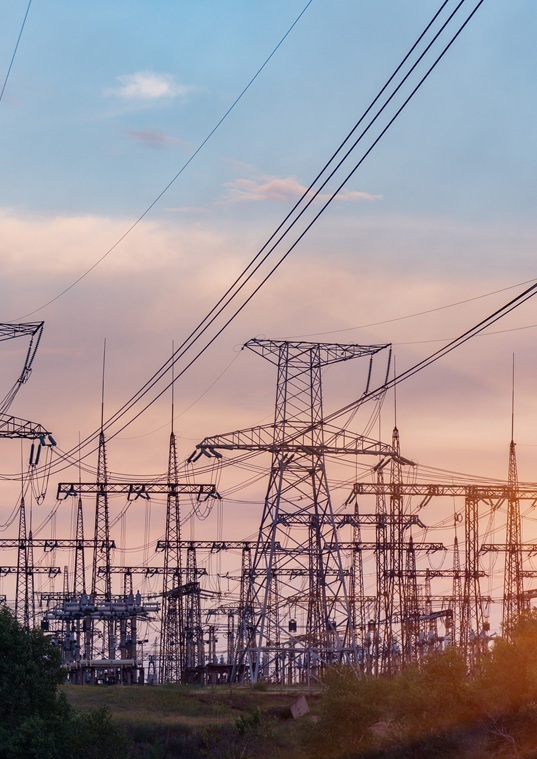
High-voltage transmission towers.
Theme IV

The self-healing grid is becoming an architectural discussion

“Self-healing grid” was once aspirational language. At DTECH 2026, it became an architectural blueprint. Three layers were repeatedly emphasized:

  • AI-powered asset intelligence
  • Utility-owned private communications networks
  • Grid automation capable of acting on real-time visibility

Automation without deterministic communications introduces risk. Private LTE and secure-by-design architectures are increasingly viewed as critical infrastructure, not optional upgrades. Security was framed as non-negotiable. As digitization expands, so does the attack surface. Cyber resilience must be embedded early in modernization programs. Importantly, autonomy is not “hands-off.” It is an automated response with explainability and safe recovery paths.

The implication is global: utilities cannot modernize solely through software. Physical assets, such as switchgears, sensors, and protection systems, remain foundational.

AI & Data science.
Theme V

Affordability is driving operational innovation

Affordability surfaced not as a political issue, but as an operational constraint. Rising infrastructure requirements, such as transmission upgrades, resilience investments, and resource diversification, are driving greater capital needs. Utilities highlighted structured long-term contracts with large loads as a mechanism to improve system utilization and absorb fixed costs.

High-load-factor data centers can improve overall asset economics when integrated effectively. Internally, leaders acknowledged that cost control will increasingly depend on operational efficiency: AI-enabled planning, reduced truck rolls through computer vision, predictive asset management, and integrated IT/OT data platforms.

The industry is looking to technology not only to enhance reliability but also to maintain capital discipline.

Server rack located in the data center to secure large amounts of data and IT infrastructure.
Theme VI

Culture and decision velocity may be the real constraint

Perhaps the most candid conversations at DTECH were about organizational readiness.

Utilities historically did not need to move quickly. Today, speed is becoming a strategic differentiator.

Leaders pointed to a familiar risk: AI adoption stalling not because of technology limitations, but because of cultural hesitation and fragmented decision rights.

True modernization now requires:

  • Faster planning cycles
  • Cross-functional integration across transmission, distribution, and generation
  • Engineers fluent in advanced modeling and analytics
  • Incentive structures aligned to execution speed
  • Leadership's willingness to fund modernization as a system capability—not a series of pilots

The limiting factor may not be infrastructure or AI; it may be the transformation of the operating model.

Where our shadows meet


What this means for energy and utilities

DTECH 2026 made one point unmistakably clear: the next 12 to 24 months will define the sector’s trajectory for the next decade.

The industry is moving from incremental modernization to structural transformation. Interconnection must become industrialized, not episodic. Digital and physical infrastructure can no longer evolve in parallel; they must be engineered as one system. Resilience must be measured in operational minutes and megawatts restored, not in policy commitments. And cybersecurity must be designed in at the architecture stage, not layered on afterward.

But perhaps the most important shift is organizational. In a world where load growth and risk growth are accelerating simultaneously, execution speed becomes a strategic asset. Utilities that can compress decision cycles, align capital deployment with system physics, and integrate AI responsibly into core workflows will set the pace.

The grid is no longer merely a utility asset. It is economic infrastructure, national competitiveness infrastructure, and increasingly, digital infrastructure.

The real differentiator will not have access to technology.

It will be the ability to operationalize it - at scale, at speed, and without compromising trust.

meet our experts

Mitali
Mitali Medhe
Go-To-Market Lead
North America
Nagarro
Joteep_Mahato
Joteep Mahato
Global Business Head
Energy & Utilities
Nagarro
Saurabh Diwakar
Saurabh Diwakar
Global Practice Head
Energy & Utilities
Nagarro

Connect with us