Germany’s Mittelstand can’t grow
on outdated systems.

Stefan Bär
Chief Technology Officer & Global Business Head, Industrial EU, Nagarro


November 11, 2026
3 min read

Key takeaway

  • We believe Germany’s Mittelstand can close a twenty-year digital backlog in just two years. AI gives us the tools; German industrial expertise and Indian technology talent give us the partnership. While the opportunity is enormous, the companies that seize it now will set the pace.

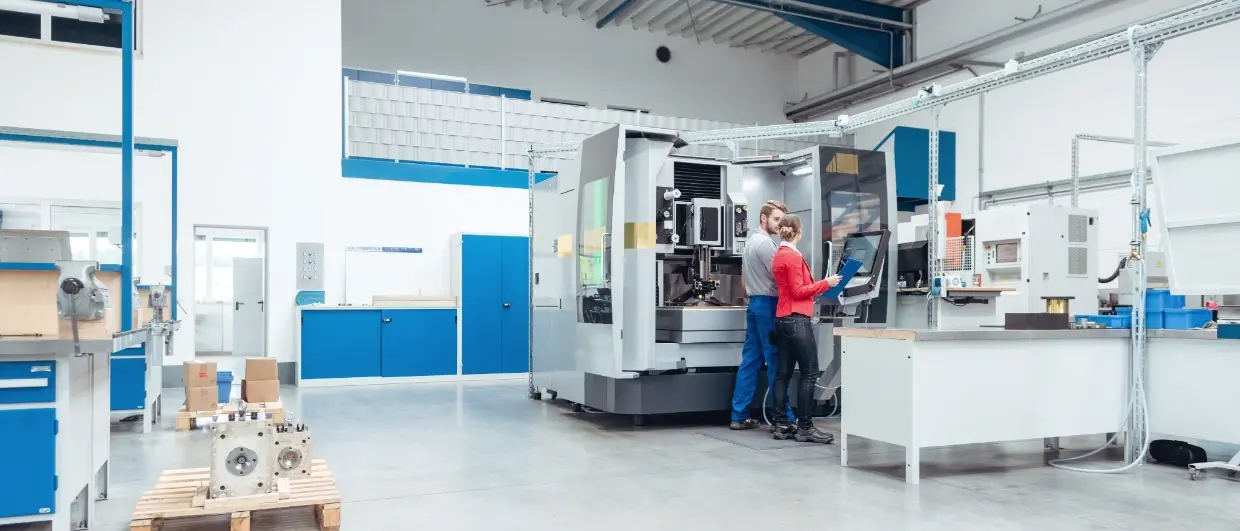
Walk the factory floors of Baden-Württemberg, Bavaria or North Rhine-Westphalia, and you will meet some of the most sophisticated manufacturers on earth. They lead the world in precision engineering, industrial machinery, speciality chemicals and automation. They have been globally competitive for decades. And many of them run on digital infrastructure that is twenty years behind where it needs to be. Not because they could not modernize, but because, for a long time, they did not need to.

These are the companies of the Mittelstand, ranging from roughly €500 million to €20 billion in revenue. By our assessment, the Mittelstand accounts for around 60% of Germany's GDP, and Germany is home to roughly half of the world's hidden champions, with comparable businesses of strategic importance across Europe. What happens to them happens to the continent's industrial base.

When strength becomes a liability

When your products are the best in the world, and order books are full, modernization looks like an optimization, not a necessity. Why rip out a working ERP system or redesign a proven process when customers keep paying a premium? While that logic held for a long time, it's no longer relevant.

Economic headwinds, supply chain complexity, margin pressure and capable competitors from lower-cost manufacturing economies have changed the calculation. Business leaders know it: in KPMG's 2026 Infrastructure Monitor, 87% of German companies named digital infrastructure their top infrastructure priority, ahead of transport and energy. Companies that treated digitization as optional are now being asked to do in a few years what they deferred for decades.

We need to be precise about how we frame this. The backlog is not a failure. It is deferred investment. The capital that did not go into IT went into products, people and markets, which is exactly why the foundation remains strong enough to build on. The difference matters, because one framing makes it a problem to manage and the other makes it an opportunity to close.

Why AI changes the maths

section-picture-web-1240x531-Stefan section-picture-mobile-860x484-4

Conventional transformation at scale is slow: years of system replacement, process redesign and change management. AI compresses that timeline dramatically. It can read and retire decades-old logic, analyze complex processes in weeks rather than quarters, and accelerate the migration of legacy systems. In my view, a twenty-year backlog can realistically be closed in one or two years. The operational payoff is well documented: McKinsey has found that Industry 4.0 technologies can cut machine downtime by 30–50% and raise labor productivity by 15–30%.

But AI does not just accelerate modernization; it changes what modernization makes possible. A manufacturer that has always sold machines can now sell outcomes, uptime and intelligence - predictive maintenance, digital twins and performance-based contracts built around the physical product. That is a new growth category, not a side project. The installed base of German machinery worldwide is one of the most valuable, and least monetized, data assets in global industry.

A partnership that is structural, not incidental

Here is where geography matters. Germany has the industrial depth: domain expertise, complex processes and long-standing global customer relationships. India has technology delivery capacity at scale. NASSCOM puts India's tech workforce at around 6 million professionals, with engineering and AI talent at a depth few nations can match.

This is a capability partnership and not an outsourcing story. Germany has what Indian technology firms need - industrial complexity and domain depth to build on. India has what the Mittelstand needs - talent at scale and delivery speed. That complementarity is the engine of this transformation.

It is why we spend time with NASSCOM, GIZ, German federal ministries and the AI Mittelstand Group, and why a recent FLO panel with a political delegation felt less like a discussion and more like a planning session. The policy environment is aligning too: anticipated trade developments between India and the EU, alongside maturing AI governance frameworks in both markets, are creating firmer ground for long-term collaboration.

The window is open for now

Timing will separate the winners from the rest. BCG's 2026 research finds that "future-built" companies, those treating AI as core infrastructure, generate 2.4× the revenue growth of laggards and three times the earnings growth. An advantage of that size compounds quickly.

The companies that move now, treating pressure as a catalyst rather than a burden, will emerge with modern infrastructure, new revenue streams and a competitive position that is structurally difficult to replicate. Those that wait for conditions to improve will discover that their competitors moved while they were waiting.

So our recommendation to Mittelstand leaders is simple.

section-4-tile-1-the-backlog
The backlog
is real
section-4-tile-2-the-tools
The tools
exist
section-4-tile-3-the-partnerships
The partnerships
are available
The only question left is urgency - and that answer is yours.
AI and Germany’s Mittelstand: modernization, growth and India’s role

FAQs

Get in touch

Twenty years behind.
Two years to catch up.