Anthropic’s Agentic Coding Report gets the destination right, but not the distance

Why the shift to AI-first is not a technology upgrade, it is the most consequential operating model transformation since the rise of the internet.

insight
April 23, 2026
9 min read

Author


Kapil Ahuja is Partner Director and CTO for Digital Experience at Nagarro. He has more than 20 years of experience in architecture, engineering, and product leadership across digital platforms, AI-led architectures, and large-scale enterprise systems.

Anthropic published their 2026 Agentic Coding Trends Report - 8 trends across foundation, capability, and impact, mapping where software development is headed. The company behind an estimated 4% of all GitHub commits has earned the right to an opinion on where this is going, so it makes for insightful reading.

As industry practitioners running engineering delivery at scale in enterprises, we max out on the Opus plan every week. In the last twelve months, while building agentic systems, we went beyond code generation into planning, governance, memory, and delivery orchestration.

While this report describes the destination correctly, it’s about the “distance” where it falls short. We will reach there shortly.

The industry celebrates how quickly agents can write codes, but very few industry practitioners even talk about the systems layer underneath, which is about team structures, work validation, planned delivery and governed quality. And this layer is destabilizing.

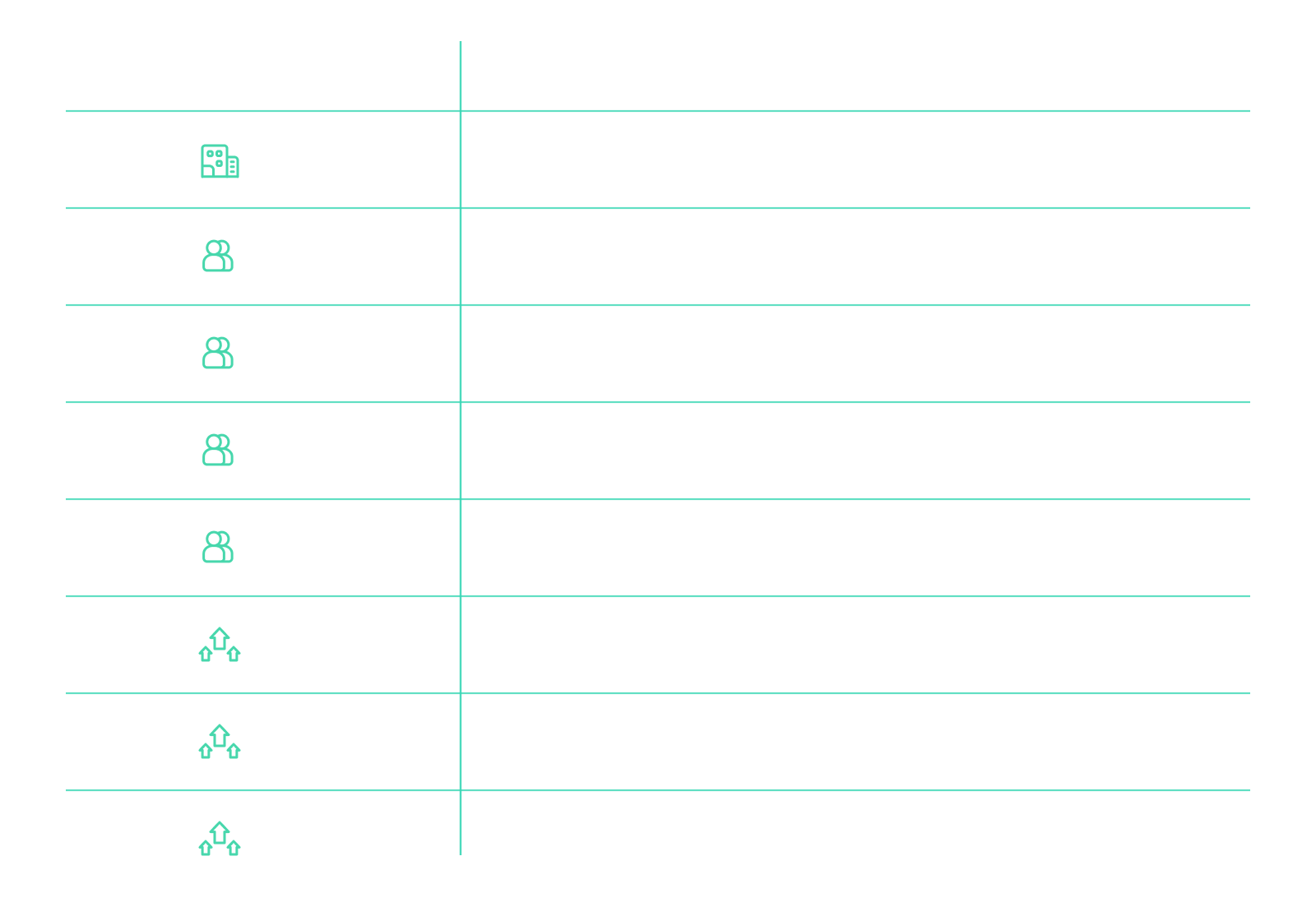
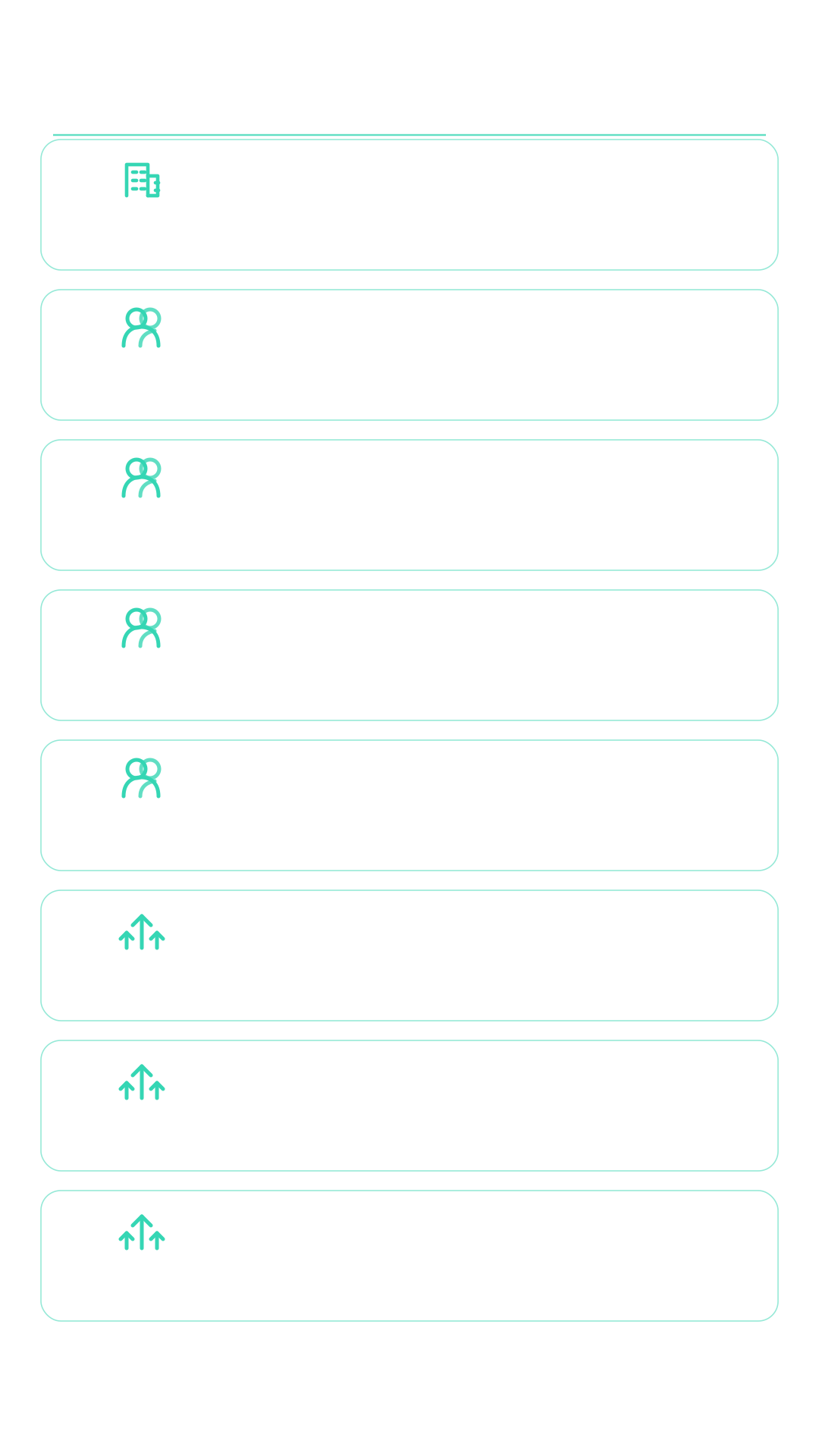
Here’s a brief capture of all the 8 trends featured in the report.

agentic_trends_transparent agentic_trends_mobile_transparent


Taking cue, here’s what we think these insights actually mean. The underlying implications shouldn't be ignored.

The industry is optimizing the wrong layer

While the headlines on agentic coding sound repetitive and they mostly dwell on writing codes faster, almost all vendors treat the software development lifecycle as a fixed structure and optimize one activity within it. And that is where they get it wrong.
To Anthropic’s credit, as mentioned in Trend 1 in the report, the SDLC (the traditional approach and the agentic coding tools era) has been covered extensively - from requirements and planning to implementation & coding to testing to deployment to feedback, and all other intermediary stages in between. 
article-image-1


The report also emphasizes the transformation of engineers’ role, where they can now create greater value through system architectural design, agent coordination, quality evaluation, and strategic problem decomposition. The report takes a futuristic outlook when it rightly identifies the great significance of human orchestration in writing codes through AI agents, evaluating their output and ensuring the system solves the right problem for the right stakeholders.

While reading the remaining trends, under the over-arch of SDLC, a pattern emerges, which is about doing the same things faster - write codes faster, review faster, onboard faster, and deliver faster.

Towards closing, in Trend 7, the report steps away from the technical domain pivoted around SDLC, to touch upon the expansion of non-technical use cases across enterprises. And they make for interesting reading - lawyers building tools, Zapier hitting 89% enterprise-wide AI adoption, amongst others.

While the report focuses on accelerated delivery within existing structures and sees expansion outside of it, it falls short in exploring the middle ground to ask a very important question – should SDLC itself be redesigned?

Also, there’s no mention of Agile, whether it still holds up when delivery cadence is agent-paced. No question about DORA metrics when deployment frequency is no longer constrained by human throughput. No rethinking of SAFe, when “synchronizing trains” could mean orchestrating agent swarms rather than coordinating with human teams. The report assumes the process stays, and the tools get faster. But we believe the SDLC process itself will undergo a structural change.
We need to rethink the ways in which things get done in software development today, and there aren’t enough practitioners talking about it. For instance, do we still need sprint ceremonies when agents can deliver in hours what used to take a sprint? Does the Scrum Master’s role survive when coordination becomes an orchestration pattern, and no longer remains a human facilitation exercise? Does validation stay in a phased manner, or does it become continuous and agent-driven? Will SAFe be relevant in a world where delivery cadence is agent-paced with human gates?
article-image-2
The questions can be many, and perhaps it’s too early to arrive at all the answers. It seems that it makes business sense for the industry to start with code generation because that’s where we spend most of our time today, but we believe that this could be a sequencing mistake - solving the visible, easy problem, while the structural one compounds underneath. Thirty years of Agile, SAFe, and delivery orthodoxy taught us how to build software with human teams. None of those assumptions hold up, when half the team is autonomous agents. The time has come to rethink the SDLC altogether and not focus only on accelerating one part of it.


The distance problem: survivorship bias at scale

The report showcases impressive numbers. Under Trend 1, it says, an Augment Code customer completed a project - which was estimated at 4-8 months - in just 2 weeks. That’s really incredible, and we don’t doubt that it happened. But here’s what the report doesn’t mention: that result came from a team that had already aced the learning curve. They’d spent months learning how to prompt, how to structure context, how to set up agent workflows, and how to validate the output. The 2-week result is the output. The many months of learning are the input cost that doesn’t get a mention in the case study.
A new team cannot pick up these tools and deliver that result on Day 1. It doesn’t work out that way; there’s a steep learning curve that must be accounted for.
anthropic-Agent_blog3


Trend 4’s data tells this story if you read it carefully. Engineers report using AI in roughly 60% of their work, but can “fully delegate” only a small fraction, 0-20% of the tasks. That’s a massive gap. It implies that the collaboration overheads and supervision costs are real, and trust-building takes time. The report frames this as “intelligent collaboration.” We’d rather frame it as “The distance between adoption and mastery is longer than anyone wants to admit”.


This is the pattern observed in actual enterprise delivery, where teams adopt Copilot or Cursor, use them for autocomplete-style code generation (or vibe coding), get a productivity bump, and then plateau. The jump from “using AI as a faster keyboard” to “restructuring delivery around agentic orchestration” requires a fundamentally different skill set, i.e., context management, intent specification, agent coordination, and output validation. These aren’t the skills most engineering teams have today. Call me a skeptic, but follow the incentives.
Vendor reports, while being insightful, are also positioned towards customer acquisition. Anthropic is at war with OpenAI, and there’s no polite way of putting it. One went on the chat route while the other built an API/SDK ecosystem. Though unsaid, both need engineering lock-in to sustain high-paced growth.
Frame 4245-Apr-07-2026-10-40-04-9627-AM-1
That doesn’t make the report wrong. The trends it identifies are real. For instance, Trend 2’s multi-agent coordination is the future, and at Nagarro, we’re also aggressively building in that direction. Or, for that matter, Trend 3’s long-running agents will reshape project economics. And, Trend 7’s expansion to non-technical users will change software demand patterns.
When the report says, “traditional timelines for onboarding to a new codebase will collapse from weeks to hours,” then that’s aspirational, not observational. When it talks about “dynamic surge staffing,” where you spin up specialist agents on demand, then that’s a product vision dressed as a trend. While the trends are real and well-directed, it’s the framing that we should read carefully to filter out the insights.
Frame 194-Jan-13-2026-02-26-52-4430-PM

We see this on the ground; clients are influenced by what they have read, which is aspirational, really. They walk into rooms expecting tools that will turn their delivery around, overnight. The marketing hype sets that kind of lofty expectation. When reality doesn’t match. When adoption is slow, when the learning curve is steep, and when the organizational change required is far deeper than installing a new IDE extension, the disillusionment hits hard.

A more realistic approach could have been an upfront mention that while these trends are directionally correct, the timeline is years, not months, and the enterprises that win will be the ones that treat this as a structural transformation, not a tool rollout.


The 27% that actually matters

There’s one data point buried in Trend 6 that deserves more attention than it gets. About 27% of AI-assisted work consists of tasks that wouldn’t have been done otherwise. That’s new work that wasn’t viable earlier. Most organizations are missing this relevant business case.

The default narrative is cost reduction, which is about doing the same work with fewer people, and faster. It’s precisely this kind of narrative framing that leads to the “4-8 months to 2 weeks” kind of headlines, and sets unrealistic expectations. The actual transformation is about capability expansion that reflects in solving problems that were never worth engineering time earlier, fixing the “papercuts” that everyone learned to live with, and exploring approaches that were too expensive to prototype.


This connects directly to Trend 7’s non-technical expansion. When every department can build, when domain experts create their own automations, when the backlog of “not worth engineering time” problems starts clearing, then the demand for software simply explodes. The shape of that demand changes from “build me a custom application” to “help me set up agents that handle my workflow.” It’s an altogether different ask which requires a differentiated delivery model, and different cost structures.
If you’re building the business case for agentic coding around cost reduction, you’re probably doing it wrong, and you are likely to be disappointed. Instead, build it around what becomes possible now, that wasn’t earlier.
Digital-workflows-tile

What we’re actually building (and why it’s different)

At Nagarro, we have skin in the game. We’re building NeuroSDLC, an initiative to rebuild the software development lifecycle with agentic orchestration at its core. It’s about rethinking the existing process and not simply bolting AI onto the existing process. With this approach, the delivery model shifts from headcount-based to outcome-based, powered by human-agent collaboration.

But NeuroSDLC is the methodology. Underneath it, the team runs on an architecture we’ve been developing called Phoenix. It’s a pattern language for how agentic systems compose, i.e.,Signal, Recipe, Agent, Skill, Memory. It’s what makes multi-agent coordination repeatable, instead of being ad-hoc.

There are three learnings from Phoenix that the Anthropic report doesn’t address:

Memory is the missing infrastructure

Trends 2 and 3 talk about multi-agent teams and long-running agents but say nothing about how agents maintain the context across sessions, teams and projects. The fundamental challenge is that every new AI session starts in a blank state. To address this, we built a dual memory system - a long-term memory for stable patterns and project knowledge, and a short-term memory for session-specific context - because without it, agents are amnesiac tools, not team members. Context management isn’t a feature; it’s the prerequisite for everything else. The report misses this point.

Governance can’t be an afterthought

Trend 8 - Security as dual-use risk. The same capabilities help defenders and attackers alike. When agents touch client codebases, production environments, and sensitive data, you need governance woven into every layer, and not just security, but quality gates, validation checkpoints, including human approval at the right moments. We built this into the recipe execution model where every workflow has defined gates when human judgment is required. It is not because we don’t trust the agents, but because enterprise clients need to trust the system.

Agentic isn’t just code generation

This is the big one. We have agent-driven skills for product discovery, roadmap planning, feature scoping, issue management, change analysis, and delivery orchestration. Code generation is one of the many capabilities required. The Anthropic report - like most in the industry - treats “agentic coding” as agents that write code. The real shift is agents that participate in the entire lifecycle - planning, building, validating, shipping and learning. That’s the structural change very few are making.

What we’d tell a room full of CTOs

Get your hands on this. While you continue to read reports and sit through vendor demos, it’s imperative that you sit down and build something with agentic tools for a week straight. It starts slowly. Initially, you’ll fight the tools, question the hype, wonder what you’re missing, and then you’ll hit an inflection point.

It’s that moment when the agent does something that would have taken you a day, and it does it in minutes, and the output is better than what you’d have written. After that, there’s no looking back. But - and this is the part the Anthropic report won’t tell you - that inflection point takes time to arrive at. It isn’t just about how to prompt the agents, rather, it’s about building an intuition about how to work with them; and rethinking workflows, not just adding AI to existing ones. Most importantly, it takes a lot of acceptance to realize that thirty years of delivery methodology needs to be questioned, not preserved.
This is a structural change. Forget what the industry taught us in the last three decades. The Agile Manifesto was written for human teams, SAFe was designed for human coordination overhead, and Scrum ceremonies assume human-paced delivery. None of these are wholly relevant in a world where half your collaborators are autonomous agents.
So, reinvent what works. And don’t wait for someone else to do it for you.
Image with idea bulbs depicting change management

The Anthropic report’s closing line is worth repeating: “The goal isn’t to remove humans from the loop - it’s to make human expertise count where it matters most.” We agree. But human expertise doesn’t count if you spend it preserving structures that no longer serve you. It counts when you direct it at reinvention.

Get in touch

Ready to go AI-first? Get in touch to turn strategy into impact.